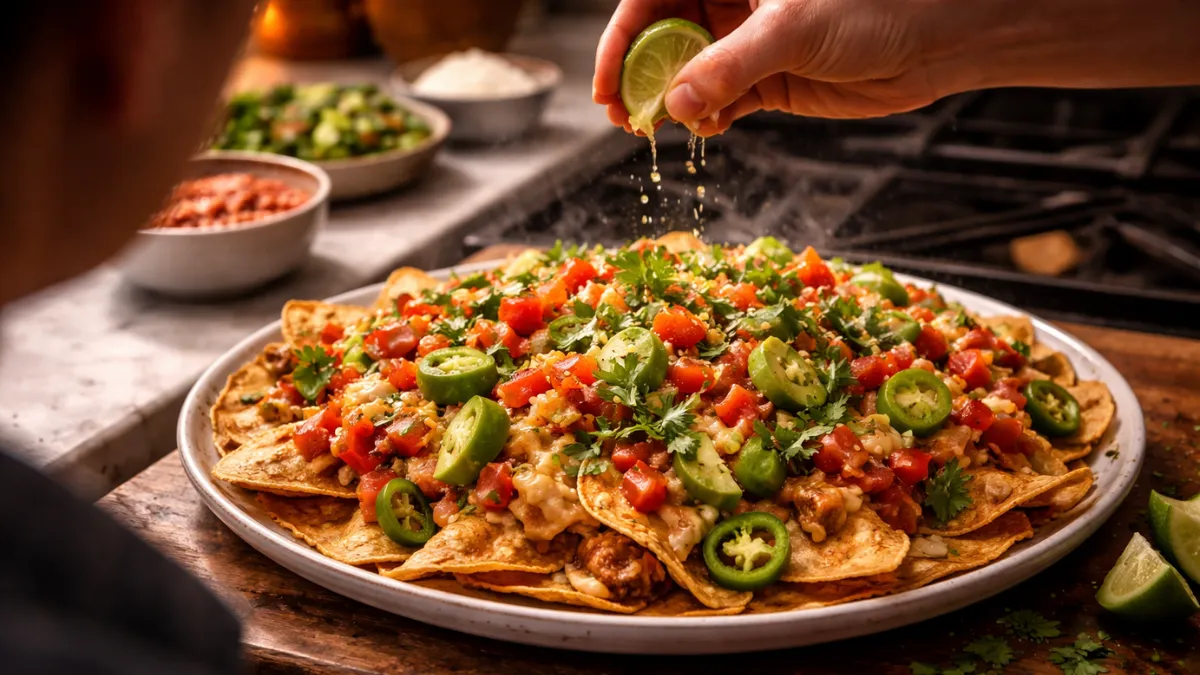
After a long workday, most people want something quick, satisfying, and easy to prepare at home. However, many snacks end up being overly processed, expensive, or lacking fresh flavor. Store-bought nachos often feel greasy or one-dimensional, while restaurant versions can be heavy and not always customizable.
That’s where an easy homemade nachos recipe with fresh toppings becomes a practical solution. It allows you to control ingredients, adjust flavors, and create a balanced dish that fits your preferences. Whether you are cooking for yourself, your family, or a small gathering, homemade nachos can be both simple and rewarding.
In this guide, you will learn how to prepare nachos from scratch using fresh, accessible ingredients. The focus is on clarity, practicality, and real results so you can confidently make nachos that taste fresh, not processed.
Understanding the Topic Clearly
Nachos are a layered dish typically made with tortilla chips, melted cheese, and a variety of toppings such as beans, vegetables, meats, and sauces. While they are often associated with casual dining or game-day snacks in the United States, nachos can easily be adapted into a полноценный meal.
The key difference between basic nachos and high-quality homemade nachos lies in freshness and balance. Fresh toppings like diced tomatoes, onions, cilantro, and homemade sauces elevate the dish significantly compared to pre-packaged versions.
Understanding this concept helps beginners avoid confusion. Nachos are not just about piling ingredients together. Instead, they require thoughtful layering, proper heat control, and ingredient balance to achieve the best texture and flavor.
Why This Problem or Topic Matters
Many people rely on packaged snacks or takeout when they need something quick. Over time, this habit can lead to meals that are less nutritious and less satisfying. Homemade nachos offer a practical alternative that fits into busy schedules without compromising quality.
For example, a family in the U.S. might want a quick Friday night snack that feels special but doesn’t require extensive cooking. Instead of ordering fast food, they can prepare nachos in under 30 minutes using ingredients already available in the kitchen.
This topic matters because it solves a common everyday problem: how to prepare a quick meal that is both enjoyable and customizable. It also allows better portion control and ingredient selection, which is important for maintaining balanced eating habits.
Key Features / Core Explanation
A successful homemade nachos recipe depends on a few essential elements that work together. Understanding these core features helps you avoid common issues and achieve consistent results.
The base starts with good-quality tortilla chips. Thick, sturdy chips hold toppings better and prevent sogginess. Thin chips often break under weight and moisture, which affects the overall experience.
Cheese plays a central role. A combination of cheeses like cheddar and Monterey Jack melts smoothly and provides both flavor and texture. Pre-shredded cheese can work, but freshly grated cheese melts more evenly due to the absence of anti-caking agents.
Fresh toppings are what make homemade nachos stand out. Ingredients like diced tomatoes, jalapeños, onions, avocado, and cilantro add contrast in flavor and texture. They also help balance the richness of melted cheese.
Protein options such as seasoned ground beef, shredded chicken, or black beans can turn nachos into a полноценный meal. These additions should be well-seasoned but not overpowering.
Finally, layering is critical. Instead of placing all toppings on top, layering ensures that every bite contains a balanced mix of chips, cheese, and toppings.
Step-by-Step Guide / Practical Application
Start by preheating your oven to 375°F (190°C). This temperature allows the cheese to melt evenly without overcooking the chips. While the oven heats, prepare your ingredients so everything is ready for assembly.
Arrange a single layer of tortilla chips on a baking sheet. Avoid overcrowding, as this prevents even distribution of toppings. Add a portion of shredded cheese over the chips, followed by your chosen protein such as cooked ground beef or beans.
Add another layer of chips on top and repeat the process. This layering method ensures that toppings are evenly distributed throughout the dish, not just on the surface.
Place the tray in the oven and bake for about 8–10 minutes. Watch closely to ensure the cheese melts completely without burning. The chips should remain crisp, not overly browned.
Once removed from the oven, immediately add fresh toppings like diced tomatoes, onions, cilantro, and sliced jalapeños. These ingredients should not be baked, as they are meant to provide freshness and contrast.
Finish with optional toppings such as sour cream, guacamole, or salsa. Serve immediately while the nachos are warm and the cheese is still melted.
Common Mistakes to Avoid
One common mistake is overloading the nachos with too many toppings. While it may seem appealing, excessive toppings can make the dish soggy and difficult to eat. Balance is more important than quantity.
Another frequent issue is using low-quality chips. Thin or fragile chips break easily and do not hold toppings well. Choosing sturdy chips makes a noticeable difference.
Skipping layering is also a mistake. Many people place all ingredients on top, which results in uneven flavor distribution. Proper layering ensures every bite is consistent.
Overbaking can ruin the texture. Leaving nachos in the oven for too long causes chips to burn and cheese to harden. Monitoring cooking time closely prevents this problem.
Tips to Get Better Results
Using freshly grated cheese instead of pre-packaged varieties improves both texture and flavor. It melts more smoothly and creates a better overall consistency.
Warming your protein before adding it to the nachos helps maintain even temperature throughout the dish. Cold toppings can disrupt the melting process.
Adding fresh toppings after baking preserves their flavor and texture. This simple step significantly improves the final result.
If you prefer extra crispiness, you can lightly toast the chips in the oven for a few minutes before adding toppings. This helps them stay firm even after adding cheese and other ingredients.
For a more balanced flavor, combine creamy, spicy, and fresh elements. For example, pairing guacamole with jalapeños and fresh tomatoes creates a well-rounded taste.
Pros and Limitations
Homemade nachos offer several advantages. They are quick to prepare, highly customizable, and often more cost-effective than ordering takeout. You can control ingredients, adjust portion sizes, and experiment with flavors.
However, there are some limitations to consider. Nachos are best enjoyed immediately after preparation, as they can lose texture if left sitting too long. They also require some attention during assembly to avoid uneven cooking.
Despite these limitations, the benefits outweigh the drawbacks for most home cooks. With a little practice, preparing nachos becomes a reliable and efficient option.
Real-Life Example or Use Case
Consider a small gathering during a weekend sports event. Instead of ordering multiple snacks, a host can prepare a tray of homemade nachos with fresh toppings. Using ingredients like grilled chicken, fresh salsa, and avocado, the dish becomes both satisfying and visually appealing.
Guests can customize their portions by adding extra toppings like sour cream or hot sauce. This flexibility makes nachos a practical choice for group settings, as it accommodates different preferences without requiring multiple dishes.
This example highlights how homemade nachos can be both convenient and adaptable, making them suitable for everyday meals as well as social occasions.
Conclusion
Easy homemade nachos with fresh toppings provide a practical way to enjoy a flavorful and customizable dish without relying on takeout or processed snacks. By focusing on quality ingredients, proper layering, and balanced flavors, you can create nachos that are both satisfying and reliable.
This approach not only improves taste but also gives you full control over what goes into your meal. Whether you are preparing a quick dinner or hosting a small gathering, homemade nachos offer a flexible and efficient solution.
With the steps and insights outlined in this guide, you can confidently make nachos that deliver consistent results every time.
FAQ’s
Can I make nachos without an oven?
Yes, you can use a skillet or microwave, but the oven provides more even melting and better texture. A skillet works well if you cover it to help the cheese melt properly.
What is the best cheese for nachos?
Cheddar and Monterey Jack are commonly used because they melt well and offer balanced flavor. A blend of cheeses often gives the best result.
How do I keep nachos from getting soggy?
Use sturdy chips, avoid excessive toppings, and add fresh ingredients after baking. Proper layering also helps maintain texture.
Can nachos be made healthier?
Yes, you can use baked chips, lean proteins, and fresh vegetables. Reducing heavy sauces and using lighter toppings improves overall balance.