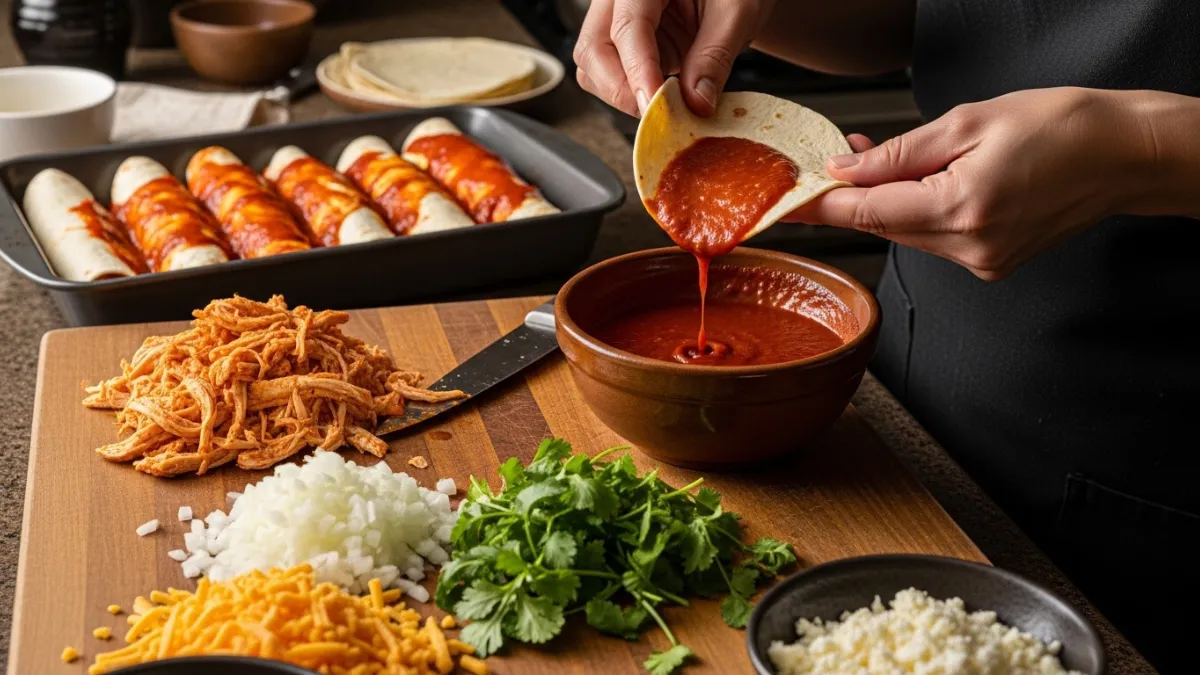
You order chicken enchiladas at a local Mexican restaurant, and they arrive hot, saucy, and full of flavor. The tortillas are soft but not soggy, the filling is rich and well-seasoned, and the sauce ties everything together perfectly. Then you try making them at home—and something feels off.
Maybe the tortillas break. Maybe the sauce tastes flat. Or maybe the dish just doesn’t have that authentic depth you expected.
The good news is that authentic chicken enchiladas are absolutely achievable at home. It’s not about complicated ingredients—it’s about understanding technique, balance, and small details that most recipes skip.
In this guide, you’ll learn how to make authentic chicken enchiladas step by step, with clear explanations, practical tips, and real-world insights so you can get restaurant-quality results in your own kitchen.
Understanding the Topic Clearly
Authentic chicken enchiladas are a traditional Mexican dish made by filling tortillas—usually corn tortillas—with seasoned chicken, rolling them, and covering them in a flavorful sauce before baking.
The key difference between authentic enchiladas and many home versions comes down to three things: the tortillas, the sauce, and the preparation method.
In authentic cooking, corn tortillas are lightly fried or warmed in oil before being filled. This step prevents them from breaking and adds flavor. The sauce is typically homemade or carefully balanced, not overly sweet or thick. And the dish focuses on harmony—not just cheese overload.
Understanding this foundation removes a lot of confusion and helps you cook with purpose instead of guessing.
Why This Problem or Topic Matters
Chicken enchiladas are one of the most searched Mexican dishes in the U.S., and for good reason. They’re comforting, versatile, and perfect for family meals or gatherings.
But when they don’t turn out right, it can feel frustrating. Ingredients are wasted, and the result doesn’t match expectations.
Getting this recipe right matters because it teaches you core cooking skills—like balancing flavors, handling tortillas properly, and building layers of taste. These skills apply far beyond enchiladas.
It also helps you recreate authentic flavors at home, which is especially valuable if you don’t have easy access to traditional Mexican restaurants.
Key Features / Core Explanation
Authentic chicken enchiladas rely on a few essential components. Each one plays a specific role in the final result.
First is the tortilla. Corn tortillas are traditional and provide the right texture and flavor. Flour tortillas may seem easier to use, but they change the dish significantly.
Second is the chicken filling. It should be well-seasoned and moist, not dry or bland. Often, it’s shredded chicken mixed with spices, onion, and sometimes a bit of sauce.
Third is the enchilada sauce. This is where most of the flavor comes from. A good sauce has depth, mild heat, and balanced acidity—not just salt and tomato.
Fourth is the assembly technique. Tortillas are dipped or lightly fried before filling. This prevents cracking and allows them to absorb flavor without falling apart.
Finally, there’s the balance of toppings. Cheese, onions, and herbs should complement the dish—not overpower it.
Step-by-Step Guide / Practical Application
Start by preparing your chicken. You can use poached, roasted, or rotisserie chicken. Shred it into small pieces so it mixes easily with seasoning.
In a pan, sauté finely chopped onions in a bit of oil until soft. Add the shredded chicken, salt, garlic, and a small amount of enchilada sauce. This step ensures the filling is flavorful on its own.
Next, prepare your sauce. If you’re making it from scratch, use a base of dried chilies or chili powder, garlic, broth, and spices. Let it simmer until slightly thickened. If using store-bought sauce, enhance it with garlic, cumin, or a splash of broth.
Now, heat a small amount of oil in a skillet. Quickly pass each corn tortilla through the hot oil for a few seconds. This softens them and prevents tearing.
Immediately dip each tortilla into the sauce. This step is key for authentic flavor and texture.
Place a small portion of chicken filling in the center of each tortilla, roll it tightly, and place it seam-side down in a baking dish.
Repeat until the dish is filled, then pour remaining sauce evenly over the top. Add a moderate amount of shredded cheese—just enough to melt and complement the dish.
Bake in a preheated oven at 375°F (190°C) for about 15–20 minutes, until the sauce is bubbling and the cheese is melted.
Let the enchiladas rest for a few minutes before serving. This helps them hold their shape and improves texture.
Common Mistakes to Avoid
One of the most common mistakes is skipping the tortilla preparation step. Using dry tortillas often leads to cracking or a chewy texture.
Another mistake is overfilling. Too much chicken makes rolling difficult and causes the enchiladas to fall apart.
Using overly thick or overly sweet sauce is also a frequent issue. Authentic enchilada sauce should be balanced and slightly thin so it soaks into the tortillas.
Many people also use too much cheese. While cheese is important, it shouldn’t dominate the dish.
Finally, not seasoning the filling properly can result in bland enchiladas—even if the sauce is good.
Tips to Get Better Results
Warm your tortillas properly. Even if you don’t fry them, heating them in oil or on a skillet improves flexibility and flavor.
Use a mix of white and dark meat chicken for better texture and richness. Chicken breast alone can be dry.
Taste your sauce before assembling. Adjust salt, acidity, and spice level as needed. This step makes a noticeable difference.
Don’t rush the baking process. Even though everything is technically cooked, baking helps the flavors come together.
Let the enchiladas rest before serving. This simple step improves both taste and presentation.
For a more authentic finish, top with chopped onions, fresh cilantro, and a squeeze of lime instead of adding more cheese.
Pros and Limitations
One of the biggest advantages of making chicken enchiladas at home is control. You can adjust spice levels, ingredients, and portion sizes to fit your needs.
It’s also a cost-effective meal, especially for families. A single batch can serve multiple people and store well for leftovers.
However, there are some limitations. Authentic preparation takes a bit more time and attention than simplified recipes.
Sourcing certain ingredients—like specific dried chilies—may be harder depending on your location. In the U.S., many grocery stores carry them, but availability can vary.
There’s also a learning curve. The first attempt may not be perfect, but small adjustments lead to noticeable improvement.
Real-Life Example or Use Case
Imagine preparing dinner for a small family gathering on a weekend. Instead of ordering takeout, you decide to make chicken enchiladas from scratch.
You prep the chicken ahead of time, make the sauce in the afternoon, and assemble everything just before dinner.
As the enchiladas bake, the kitchen fills with a rich, savory aroma. When served, the tortillas are soft, the filling is flavorful, and the sauce ties everything together.
Guests notice the difference immediately. The dish tastes balanced—not overly heavy or artificial.
This kind of experience is what makes learning authentic techniques worthwhile. It turns a simple meal into something memorable.
Conclusion
Making authentic chicken enchiladas at home is less about complexity and more about understanding technique.
When you focus on the right tortillas, properly seasoned filling, balanced sauce, and correct assembly, the results improve dramatically.
The difference between average and authentic often comes down to small details—like warming tortillas or tasting your sauce before baking.
With practice, these steps become second nature. And once you get them right, you’ll be able to create enchiladas that truly match the flavor and texture of restaurant-quality dishes.
Take your time, follow the process, and adjust based on your taste. The end result is a meal that feels both satisfying and genuinely authentic.
FAQ’s
Can I use flour tortillas instead of corn tortillas?
You can, but it won’t be authentic. Flour tortillas create a softer, less traditional texture and may become soggy when baked.
What’s the best way to cook chicken for enchiladas?
Poaching or roasting works well. The key is to keep the chicken moist and season it properly before shredding.
Can I make enchiladas ahead of time?
Yes. You can assemble them a few hours in advance and refrigerate. Bake just before serving for best results.
Why do my tortillas break when rolling?
This usually happens when tortillas are cold or dry. Lightly frying or warming them prevents cracking.