You decide to make guacamole at home for a quick snack or to serve with tacos, but the result doesn’t taste quite right. Maybe it turns out bland, too watery, or overly sour. This is a common experience, even for people who cook regularly. Guacamole looks simple, yet small details can make a big difference.
The good news is that a truly delicious guacamole doesn’t require complicated techniques or hard-to-find ingredients. With a few fresh items and a clear method, you can prepare a balanced, flavorful dip in just minutes.
In this guide, you’ll learn exactly how to make a simple guacamole using fresh ingredients, what mistakes to avoid, and how to adjust the recipe to suit your taste. By the end, you’ll have a reliable approach you can use anytime.
Understanding the Topic Clearly
Guacamole is a traditional Mexican dip made primarily from ripe avocados. At its core, it combines mashed avocados with ingredients like lime juice, salt, onions, tomatoes, and herbs such as cilantro.
What makes guacamole unique is its simplicity. Unlike many dips, it relies heavily on the natural flavor and texture of fresh ingredients rather than heavy seasoning or cooking.
For beginners, confusion often comes from overcomplicating the recipe or using ingredients that overpower the avocado. In reality, a good guacamole is about balance. Each ingredient should enhance the avocado, not mask it.
Understanding this principle helps you focus on freshness, proper ratios, and timing rather than adding unnecessary elements.
Why This Problem or Topic Matters
Guacamole is widely served across the United States, from casual home meals to restaurants and gatherings. It’s often expected to be fresh, flavorful, and well-balanced. When it falls short, it can affect the overall dining experience.
For example, if you’re hosting friends for a game night or preparing a quick appetizer for family, a poorly made guacamole can feel disappointing. On the other hand, a well-made version adds freshness and richness to any meal.
It also matters because guacamole is often seen as a healthy option. Avocados provide beneficial fats, and fresh ingredients contribute to a clean, wholesome dish. Making it correctly ensures you get both great taste and nutritional value.
Learning how to prepare it properly saves time, avoids waste, and gives you confidence in your cooking.
Key Features / Core Explanation
A simple guacamole recipe depends on a few key elements that work together.
First is the avocado itself. The quality and ripeness of the avocado determine the base flavor and texture. A ripe avocado should yield slightly when pressed but not feel mushy.
Second is acidity, usually from lime juice. This adds brightness and prevents the avocado from browning too quickly. It also balances the richness.
Third is texture. Some people prefer a chunky guacamole, while others like it smoother. The method of mashing and the size of chopped ingredients affect this.
Fourth is seasoning. Salt enhances all the flavors, while optional ingredients like onions, tomatoes, and cilantro add layers of taste and freshness.
Finally, simplicity is key. Adding too many ingredients can overwhelm the natural flavor of the avocado, which should remain the focus.
Step-by-Step Guide / Practical Application
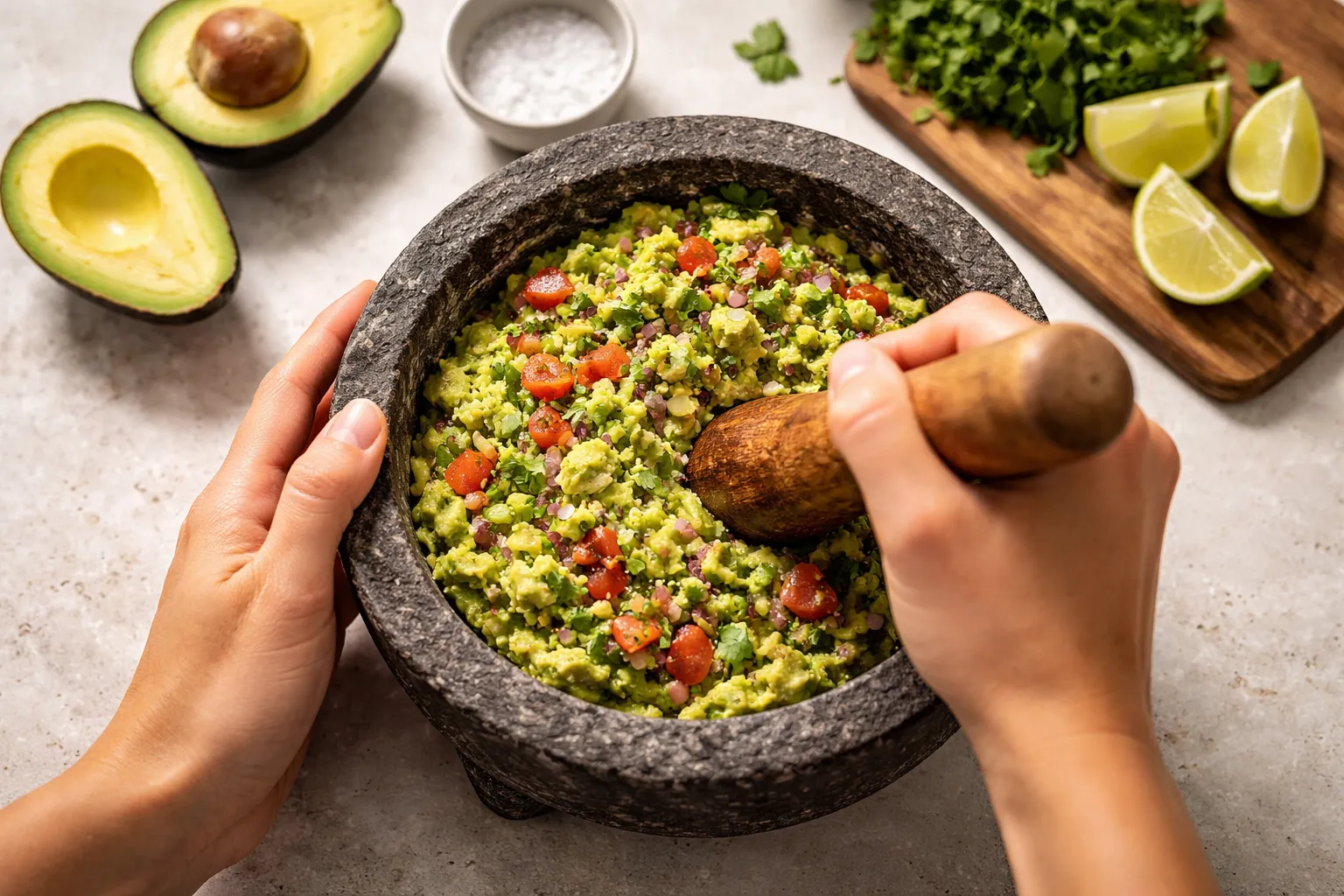
Start by selecting two to three ripe avocados. Cut them in half, remove the pit, and scoop the flesh into a bowl. Use a fork to mash them gently. Decide your preferred texture at this stage, leaving it slightly chunky or smoothing it further.
Add one to two teaspoons of fresh lime juice. Mix it evenly into the mashed avocado. This step not only adds flavor but also helps maintain the color.
Finely chop a small amount of red or white onion. Add it to the bowl. Keep the quantity moderate so it doesn’t overpower the avocado.
Dice a small tomato and remove excess seeds and liquid. This prevents the guacamole from becoming watery. Add the tomato pieces to the mixture.
If you enjoy herbs, add a small handful of chopped fresh cilantro. This adds a bright, fresh note.
Season with salt gradually. Start with a small pinch, mix, and taste. Adjust until the flavor feels balanced.
Mix everything gently rather than aggressively. Overmixing can make the guacamole too smooth and less appealing.
Taste the final mixture and adjust as needed. You may add a little more lime juice or salt depending on your preference.
Serve immediately for the best flavor and texture. If needed, cover tightly to minimize air exposure.
Common Mistakes to Avoid
One of the most common mistakes is using unripe or overripe avocados. Unripe avocados are hard and lack flavor, while overripe ones can taste bitter and feel mushy.
Another mistake is adding too much lime juice. While acidity is important, excessive lime can make the guacamole sour and overpower the avocado.
Using watery tomatoes without removing seeds is also a frequent issue. This leads to a diluted texture and less concentrated flavor.
Over-seasoning with salt or spices can mask the natural taste of the ingredients. It’s better to season gradually and taste as you go.
Many people also overmix the guacamole. This removes the appealing texture and creates a paste-like consistency.
Finally, preparing it too far in advance without proper storage can result in browning and loss of freshness.
Tips to Get Better Results
Always use fresh ingredients. Fresh lime juice, crisp onions, and ripe avocados make a noticeable difference compared to processed or older items.
Taste at every stage. This allows you to adjust the balance rather than trying to fix everything at the end.
Keep it simple. Focus on a few high-quality ingredients instead of adding too many extras.
Use a fork instead of a blender. This helps control the texture and keeps the guacamole from becoming overly smooth.
If you prefer a milder flavor, soak chopped onions briefly in cold water before adding them. This reduces sharpness without removing flavor.
Serve immediately when possible. Fresh guacamole tastes best right after preparation.
If you need to store it, press plastic wrap directly onto the surface to reduce air exposure. This helps slow down browning.
Pros and Limitations
One of the main advantages of this simple guacamole recipe is speed. It can be prepared in under 10 minutes with minimal effort.
Another benefit is flexibility. You can adjust ingredients based on personal preference, dietary needs, or what you have available.
It is also a relatively healthy option, providing beneficial fats and fresh ingredients without heavy processing.
However, there are some limitations. Guacamole has a short shelf life and is best consumed fresh. Even with proper storage, the texture and color may change over time.
Ingredient quality also plays a significant role. If fresh avocados or produce are not available, the final result may not be as satisfying.
Additionally, achieving the perfect balance may take a few attempts, especially for beginners.
Real-Life Example or Use Case
Imagine you’re preparing a casual dinner at home with tacos and grilled vegetables. You want something fresh to complement the meal without spending a lot of time in the kitchen.
Using this simple guacamole method, you quickly prepare a bowl in under 10 minutes. The creamy avocado, balanced acidity, and fresh ingredients add contrast to the warm, savory dishes.
Your guests notice the freshness immediately. Instead of a store-bought dip, the homemade guacamole feels more vibrant and authentic.
This approach works equally well for game nights, family gatherings, or even as a quick snack with tortilla chips or vegetable sticks.
Conclusion
A simple guacamole recipe using fresh ingredients is one of the easiest ways to create a flavorful, satisfying dish at home. The key lies in using ripe avocados, balancing acidity, and keeping the preparation straightforward.
By understanding the basics, avoiding common mistakes, and following a clear step-by-step approach, you can consistently achieve a fresh and well-balanced result.
This method is practical, adaptable, and suitable for everyday meals or special occasions. Once you become familiar with the process, making guacamole becomes quick, reliable, and enjoyable.
With a little attention to detail, you can create a dip that feels fresh, natural, and complete without needing anything complicated.
FAQ’s
Can I make guacamole without cilantro?
Yes, cilantro is optional. If you don’t like its taste, you can leave it out or replace it with a small amount of parsley for a different flavor.
How do I know if an avocado is ripe?
A ripe avocado should feel slightly soft when pressed but not mushy. The skin may also appear darker, depending on the variety.
Why does my guacamole turn brown?
Exposure to air causes oxidation, which leads to browning. Adding lime juice and minimizing air contact helps slow this process.
Can I store guacamole in the refrigerator?
Yes, but it’s best consumed fresh. If storing, press plastic wrap directly onto the surface and keep it in an airtight container.