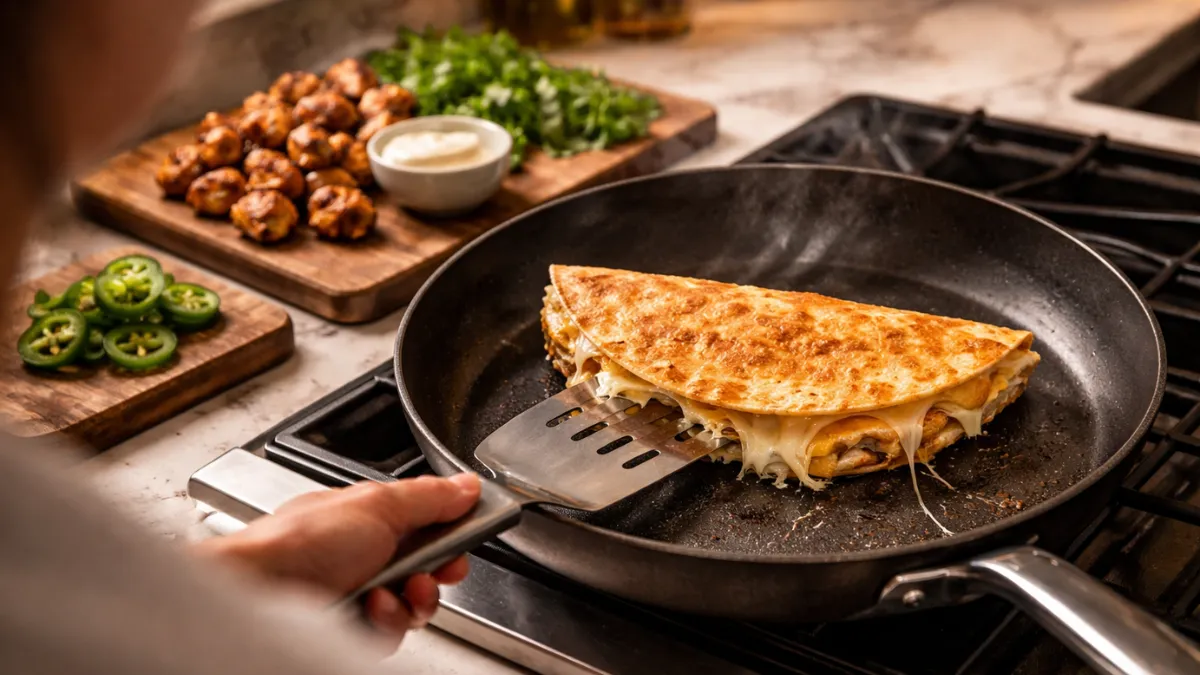
If you’ve ever ordered a chicken quesadilla at a restaurant and thought, “Why doesn’t mine taste like this at home?”, you’re not alone. Many people follow recipes but end up with something dry, bland, or overly greasy.
The difference usually isn’t complicated cooking skills. It comes down to a few key details—how the chicken is seasoned, how the tortilla is cooked, and how the ingredients are layered.
In this guide, you’ll learn how to make an easy chicken quesadilla that delivers that same restaurant-style flavor and texture. By the end, you’ll understand exactly what makes the difference and how to get it right every time.
Understanding the Topic Clearly
A chicken quesadilla is a simple dish made with tortillas filled with cooked chicken, cheese, and sometimes vegetables, then folded and cooked until crispy on the outside and melted inside.
At first glance, it seems straightforward. But restaurant versions often taste better because they focus on balance—seasoning, moisture, texture, and cooking technique all work together.
This matters because small mistakes—like using dry chicken or too much filling—can completely change the final result. Understanding how each component works helps you avoid those issues.
Why This Problem or Topic Matters
Quesadillas are a go-to meal in many households across the U.S. because they’re quick, affordable, and family-friendly. But when they don’t turn out well, they can feel disappointing despite the effort.
For example, busy parents might rely on quesadillas for weeknight dinners. If the result is soggy or lacks flavor, it doesn’t meet expectations—especially when compared to what you’d get at a casual Mexican restaurant.
Getting this recipe right means you can consistently prepare a satisfying meal at home without relying on takeout. It also helps you save money while still enjoying restaurant-quality food.
Key Features / Core Explanation
The difference between an average quesadilla and a restaurant-style one comes down to a few core elements.
First is the chicken. Restaurants typically use well-seasoned, juicy chicken—often cooked with spices like cumin, paprika, garlic powder, and a touch of lime.
Second is the cheese. A good quesadilla uses cheese that melts smoothly, such as Monterey Jack, cheddar, or a blend. The cheese acts as both flavor and glue, holding everything together.
Third is the tortilla. Flour tortillas are commonly used in the U.S. because they crisp up nicely while staying soft inside. The quality and size of the tortilla also matter.
Fourth is heat control. Cooking on medium heat allows the tortilla to crisp without burning while giving the cheese enough time to melt fully.
Finally, balance is key. Too much filling makes the quesadilla messy and uneven. Too little makes it dry. Restaurants get this balance right, and that’s what you’ll learn to do.
Step-by-Step Guide / Practical Application
Start by preparing the chicken. Use boneless, skinless chicken breasts or thighs. Season them with salt, pepper, cumin, paprika, garlic powder, and a small amount of oil. Cook in a skillet over medium heat until fully done, then slice or shred.
Next, prepare your ingredients. Grate your cheese instead of using pre-shredded varieties when possible. Freshly grated cheese melts more smoothly and gives better texture.
Heat a large skillet or non-stick pan over medium heat. Add a small amount of butter or oil. Place one tortilla in the pan.
Sprinkle a layer of cheese evenly across half of the tortilla. Add your cooked chicken on top of the cheese, then add a little more cheese over the chicken. This helps everything stick together.
Fold the tortilla in half and press gently with a spatula. Cook for about 2–3 minutes on each side until golden brown and crispy.
Remove from the pan and let it rest for a minute before cutting. This allows the cheese to set slightly and prevents the filling from spilling out.
Slice into wedges and serve with sides like sour cream, salsa, or guacamole.
Common Mistakes to Avoid
One of the most common mistakes is using dry or under-seasoned chicken. Without proper seasoning, the quesadilla will taste flat no matter how good the cheese is.
Another mistake is overloading the tortilla. Too much filling prevents even cooking and makes it hard to flip without breaking.
Using high heat is also a frequent issue. While it may seem faster, high heat can burn the tortilla before the cheese melts properly.
Pre-shredded cheese can be convenient, but it often contains anti-caking agents that affect melting. This can lead to a less creamy texture.
Finally, skipping the resting step after cooking can cause the filling to slide out when cutting, making the quesadilla messy.
Tips to Get Better Results
Use chicken thighs if you want extra juiciness. They have more fat than chicken breasts and are less likely to dry out.
Add a small squeeze of lime juice to the chicken after cooking. This brightens the flavor and adds a subtle freshness that’s common in restaurant dishes.
Try using a mix of cheeses instead of just one. Combining Monterey Jack with cheddar gives both creaminess and a slightly sharper taste.
Cook with moderate heat and be patient. Even cooking is what creates that perfect crispy exterior and gooey interior.
If you want extra flavor, lightly toast the tortilla before adding the filling. This adds a subtle nuttiness and improves texture.
Pros and Limitations
One of the biggest advantages of this recipe is its simplicity. It uses basic ingredients that are easy to find in most U.S. grocery stores.
It’s also highly customizable. You can add vegetables like bell peppers or onions, or adjust the seasoning to suit your taste.
However, it does require attention to detail. Small changes in heat or ingredient balance can affect the outcome.
Another limitation is that it’s best enjoyed fresh. Quesadillas tend to lose their crispness when reheated, although they can still be edible.
Real-Life Example or Use Case
Imagine you’re preparing a quick dinner after work. You have leftover cooked chicken in the fridge and limited time.
Instead of ordering takeout, you follow this method. Within 20 minutes, you have a crispy, flavorful chicken quesadilla that tastes similar to what you’d get at a casual restaurant.
Your family enjoys it, and you’ve saved both time and money. Over time, this becomes a reliable go-to meal in your weekly routine.
Conclusion
Making a chicken quesadilla that tastes like a restaurant version doesn’t require advanced cooking skills. It comes down to understanding a few key principles—proper seasoning, balanced ingredients, and controlled cooking.
By following the steps and avoiding common mistakes, you can consistently create quesadillas that are crispy on the outside, melted on the inside, and full of flavor.
Once you get comfortable with the process, you can adjust and personalize the recipe to suit your preferences. The result is a simple, reliable meal that delivers real satisfaction every time.
FAQ’s
What type of cheese works best for chicken quesadillas?
Monterey Jack is one of the best options because it melts smoothly. Cheddar or a Mexican blend can also work well.
Can I use leftover rotisserie chicken?
Yes, rotisserie chicken is a great option. Just make sure to season it slightly before using to enhance the flavor.
How do I keep the quesadilla from getting soggy?
Avoid adding too many wet ingredients and cook on medium heat to allow proper crisping.
Can I make this recipe ahead of time?
You can prepare the chicken ahead, but it’s best to cook the quesadilla fresh for the best texture.